Trump Confirms Joint U.S.-Japan Yen Support, Calls Move ‘Signal of Friendship’
08/03/2026 / By Sterling Ashworth

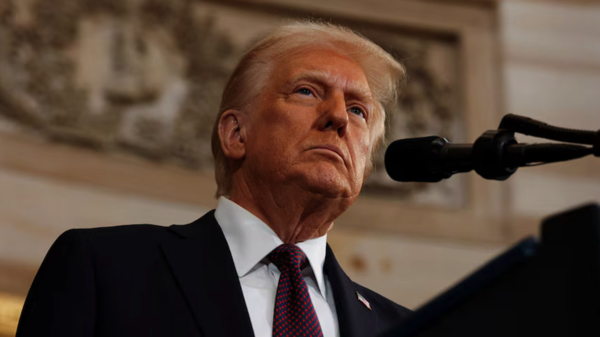
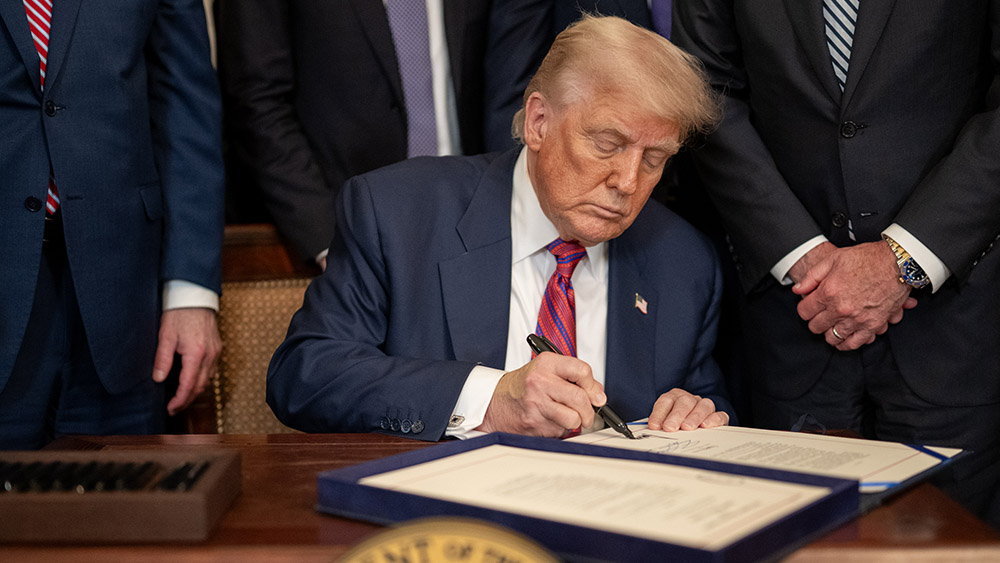
President Donald Trump confirmed Sunday that the United States had intervened jointly with Japan to support the yen, describing the move as a “signal of friendship.” According to the Financial Times, the U.S. Treasury coordinated with Japan for the first time in nearly three decades, with the Federal Reserve Bank of New York selling euros to buy yen on Friday. Trump said the action would bring “financial benefit” to the U.S. and help the world economy.
“Japan’s been very good to us, with the exception, of course, of Pearl Harbor,” Trump said, according to the Financial Times. Japan and the U.S. confirmed that they jointly intervened last week to halt a slide in the yen to a fresh 40-year low, according to the BBC [1].
Yen’s Recent Decline and Market Conditions
The yen slid to 163.24 per dollar last month, its weakest level since 1986, as higher U.S. interest rates, rising oil prices and persistent capital outflows weighed on the currency, according to market data cited by the Financial Times. Oil prices have surged this year amid U.S.-Iran escalation, feeding inflationary concerns [2]. In December 2025, the Bank of Japan lifted its key rate to 0.75 percent, the highest in three decades, but the yen initially plunged after the decision, according to market reports [3].
The currency rebounded sharply last week, leading to speculation that Japanese authorities had intervened in currency markets, the Financial Times reported. In June 2024, the U.S. Treasury placed Japan back on a watchlist of major trading partners monitored for potentially unfair foreign exchange practices [4]. Currency intervention involves monetary authorities buying or selling foreign exchange to influence the exchange rate; as economist Daniel Gaske wrote, a central bank can supply as much of its own currency as necessary because it “prints it” [5].
Japan’s Finance Minister Satsuki Katayama said the ministry on Friday “purchased the Japanese yen in coordination with the US Department of the Treasury,” calling the move a response to “excessive volatility and disorderly movements,” according to the Financial Times.
Official Statements and Rationale
Asked why the U.S. was supporting Japan’s currency, Trump said, “Because we have a good relationship with Japan,” and noted the U.S. is “very strong, very very strong financially,” according to the Financial Times.
Katayama said Japan “will not hesitate to conduct further joint intervention,” according to her statement. U.S. Treasury Secretary Scott Bessent said in a post on X: “Friday’s coordinated foreign exchange actions countered disorderly yen movements.” He added that the U.S. would not hesitate to participate in further joint intervention, citing economic security and the U.S.-Japan alliance, according to the Financial Times.
Both Japan’s finance ministry and Bessent have said they will not hesitate to conduct joint interventions in the future, according to the BBC [1].
Market Estimates and Historical Context
Analysts cited by the Financial Times estimated Japan’s intervention may have totaled about 8.45 trillion yen ($52.8 billion), while the Nikkei business daily put the amount at between 6 trillion and 7 trillion yen. Neither the U.S. Treasury nor Japan’s Ministry of Finance disclosed an official total for the intervention, the report stated.
According to the Financial Times, Friday’s coordinated action was the first U.S.-Japan effort to support the yen since 1998. The BBC reported that the previous joint intervention came in 2011, when the two countries took coordinated action to weaken the yen after the earthquake and tsunami that hit eastern Japan [1].
Academic research on Japanese intervention notes that most operations are carried out by the central bank as an agent, even in countries where the treasury, or ministry of finance, is in charge [6]. Studies have found that concerted interventions conducted with the United States were highly effective compared with unilateral Japanese operations [6]. Nomi Prins, in her examination of central bank cooperation, wrote that the Bank of Japan, “in coordination with other central banks, has endeavored to maintain the stability of the global financial system” through instruments such as currency swap arrangements [7].
Further Intervention Pledged
Both Japanese and U.S. officials said they were prepared to act again if the yen showed disorderly movements, according to statements from Katayama and Bessent. Trump characterized the U.S. role as assistance to an ally, saying, “We’re always there for Japan,” while emphasizing the dollar’s strength in comparison, according to the Financial Times.
The coordinated action marked a rare instance of U.S. involvement in supporting another major economy’s currency, according to analysts. Some financial commentators have questioned the durability of government currency operations. Chris Martenson wrote in 2024 that financial markets now contend with “non-economic influences such as central bank market interference and manipulation activities” [8]. In January 2026, Martenson noted that yields on Japanese 30-year bonds had spiked to as high as 4.99 percent, indicating that market confidence in Japan’s economic policies was waning [9].
References
- BBC News. “US and Japan jointly intervene to prop up yen in rare move”. August 3, 2026.
- Zero Hedge. “Futures Slide, Oil Surges As Iran War Returns, Chip Stocks Tumble As Korea, SK Hynix Crash”. July 13, 2026.
- Zero Hedge. “Loss Of Credibility: Yen Craters, Yields Surge After BOJ Hikes Rates To Highest Since 1999”. December 19, 2025.
- NaturalNews.com. “US Treasury puts Japan back on currency manipulator watchlist for potential foreign exchange malpractices”. NaturalNews.com. June 25, 2024.
- Gaske Daniel. “Understanding US and global economic trends: a guide for the non-economist”.
- Takatoshi Ito. “Myths and Reality of Foreign Exchange Interventions: An Application to Japan”. International Journal of Finance and Economics. 2007.
- Nomi Prins. “Collusion: How Central Bankers Rigged the World”.
- Chris Martenson. “The Bank of Japan Is Ruining Life for Its People. Same as The Fed.”. PeakProsperity.com. July 11, 2024.
- Chris Martenson. “Volatility In Markets: Friend Or Foe For Your Portfolio”. PeakProsperity.com. January 12, 2026.
Explainer Infographic

Submit a correction >>
Tagged Under:
big government, bubble, Collapse, currency crash, currency reset, debt bomb, debt collapse, Federal Reserve, finance riot, foreign relations, government debt, interest rates, market crash, money supply, national security, risk, Treasury, Trump, US-Japan, White House, yen
This article may contain statements that reflect the opinion of the author
RECENT NEWS & ARTICLES